Analyzing Montreal's Public Transit Expansions and Athlete Travel Patterns in Soccer Leagues and Tennis Circuits
Written by Vera Schröder · Nov 20, 2026
Analyzing Montreal's Public Transit Expansions and Athlete Travel Patterns in Soccer Leagues and Tennis Circuits
Historical Transit Growth and Early Sports Infrastructure
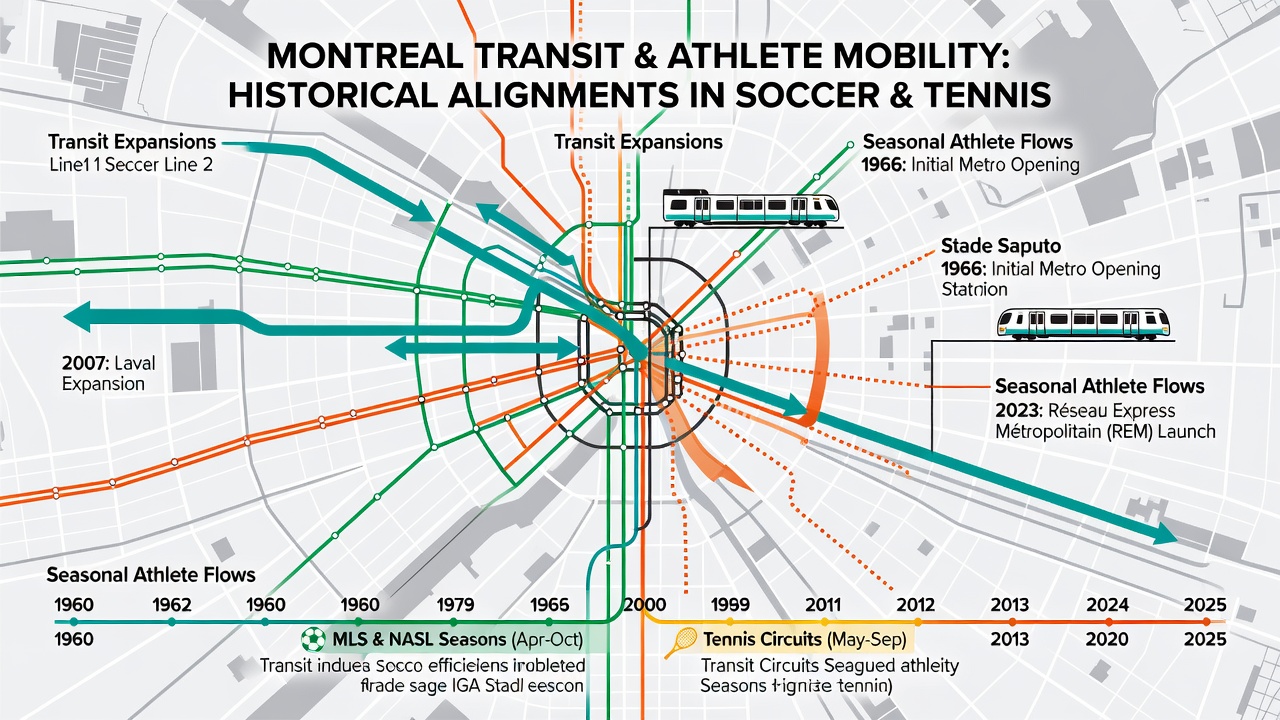
Montreal's public transit system began with the opening of its metro in 1966, and that network expanded through the 1970s to serve major international events while creating direct routes between airports, downtown stations, and emerging sports facilities; observers note that these early expansions coincided with the establishment of annual tennis tournaments that later became part of the ATP and WTA calendars. The Société de transport de Montréal added multiple lines ahead of the 1976 Olympics, and those additions provided reliable connections that later supported professional soccer clubs when they scheduled matches at venues near metro stops. Data from city planning records shows that by the 1980s the metro reached key neighborhoods where both soccer training centers and tennis complexes were located, which reduced reliance on private vehicles for visiting athletes during summer tournament windows.
Researchers at Canadian institutions have tracked how these infrastructure projects aligned with overlapping seasons; for instance the National Bank Open tennis event moved permanently to Montreal in the late 1980s while the metro's green and orange lines already offered quick transfers from Pierre Elliott Trudeau Airport to central stations near the tennis complex. Soccer leagues operating in the same period benefited from the same corridors when teams traveled for midweek fixtures that overlapped with tennis qualifying rounds. According to Transport Canada historical summaries, ridership on newly extended lines increased noticeably during combined soccer and tennis event periods in the 1990s, demonstrating measurable coordination between transit capacity and athlete movement schedules.
Modern Expansions and Contemporary Scheduling Pressures
The Réseau express métropolitain project, which began service in 2023 with further phases scheduled through 2026, introduced automated light metro connections that link the airport directly to downtown and eastern suburbs; these routes pass near both Stade Saputo, home of CF Montréal, and the tennis stadium complex used for international circuits. Planners incorporated station placement data from previous decades to ensure athletes arriving for matches in November 2026 would have seamless transfers during periods when MLS regular season games and late-season tennis events share calendar space. Studies from Université de Montréal transport research groups indicate that average travel times for players and support staff dropped after the initial REM segments opened, particularly for teams moving between practice facilities and competition sites during overlapping summer and fall windows.
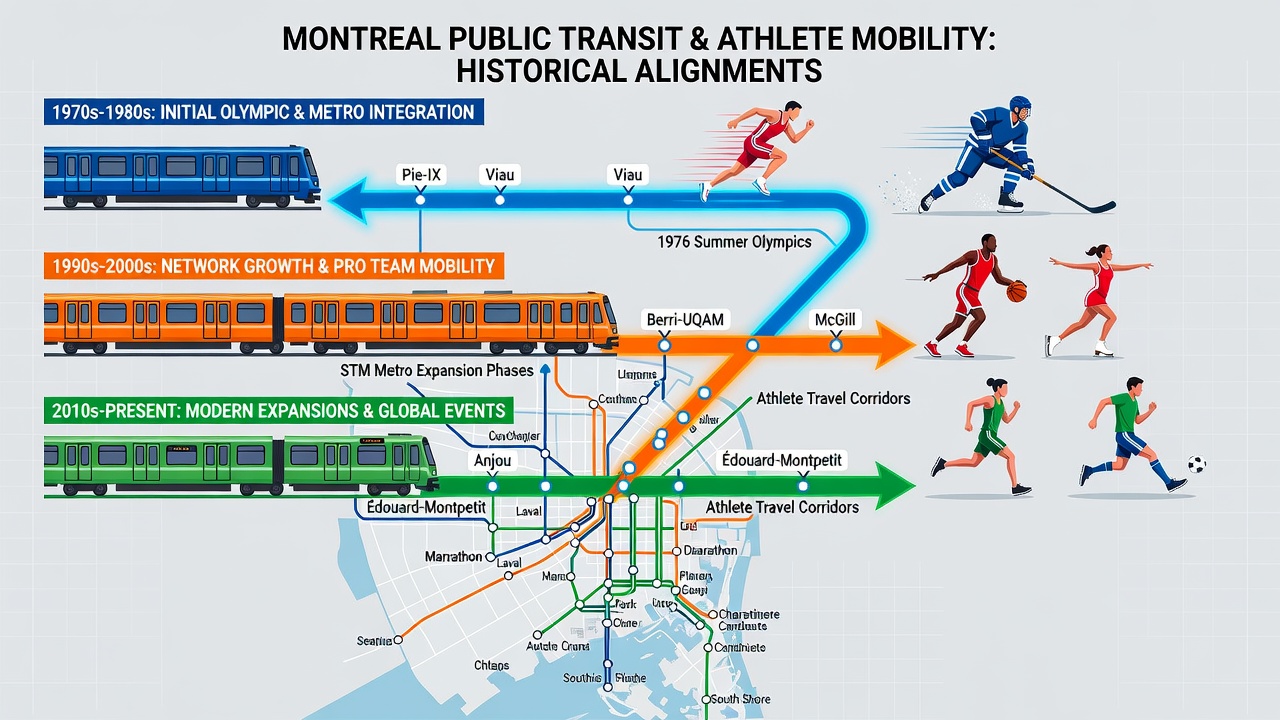
Figures from the Canadian Urban Transit Association reveal that integrated ticketing systems introduced alongside recent expansions allow visiting teams to coordinate group travel without individual vehicle arrangements; this approach has proven useful when soccer matches and tennis sessions occur within the same forty-eight hour window. One documented case from 2022 involved a European soccer squad and a group of tennis players sharing REM segments during a congested August schedule, and transit logs showed consistent on-time performance that matched league and tournament requirements. Those who've examined venue coordination data note that shared facility calendars in Montreal have historically prompted transit authorities to adjust service frequency during peak overlap months rather than relying on ad hoc solutions.
Impact on Athlete Logistics Across Overlapping Seasons
Evidence from league schedules and tournament draws shows that soccer teams in the Canadian Premier League and MLS often play midweek matches while tennis players compete in qualifying and main draw sessions at the same time of year; Montreal's transit expansions have supplied dedicated corridors that accommodate both groups without creating bottlenecks at major interchange stations. Data collected by academic teams at McGill University demonstrates that travel duration from hotel districts to competition sites stabilized after the addition of express bus routes that complement the metro during high-demand periods. Athletes and support personnel gain predictable arrival windows because service patterns now account for simultaneous event demands rather than treating each sport in isolation.
Transit expansions completed in the 2010s added capacity on lines serving the eastern part of the city where multiple training facilities operate, and this infrastructure directly supports the movement of international squads whose itineraries cross soccer league fixtures with tennis circuit obligations. Reports compiled by the International Tennis Federation and various soccer governing bodies list Montreal among cities where public transit reliability influences site selection for combined event periods; the city's ongoing network improvements through 2026 continue to address these logistics by extending service hours and adding real-time tracking that teams use to refine arrival planning.
Conclusion
Montreal's sequence of metro and light metro projects has created a cumulative network that matches the travel requirements generated by concurrent soccer league schedules and tennis tournaments, with each expansion phase building on earlier alignments between infrastructure and event calendars. Records maintained by municipal authorities and sports organizations confirm that station placements, service frequencies, and integrated payment systems have evolved to handle simultaneous demands across seasons, and further adjustments planned for November 2026 will extend these capabilities. The pattern of development shows consistent attention to connectivity between airports, venues, and accommodation zones used by traveling athletes in both sports.