Cross-sport data streams from Montreal outlets show how NBA load metrics align with MLB bullpen usage patterns during overlapping international tennis and golf circuits
Written by Vera Schröder · Oct 9, 2026
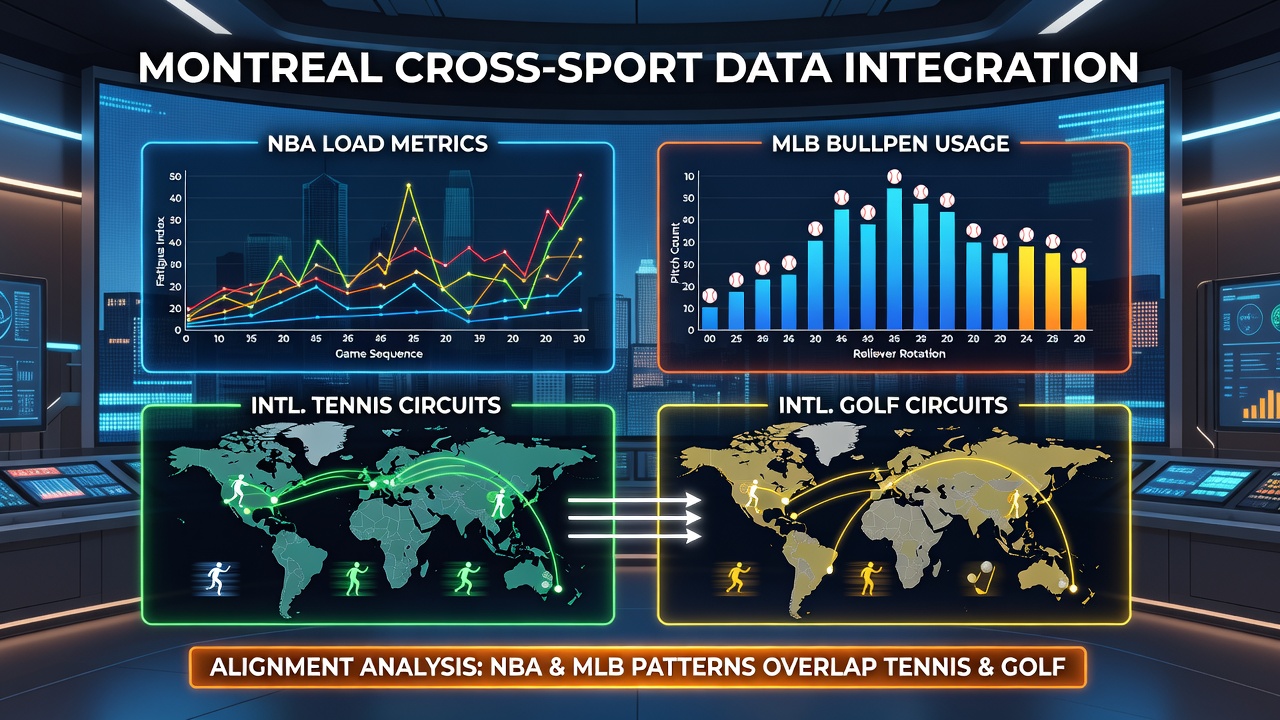
Cross-sport data streams from Montreal outlets show how NBA load metrics align with MLB bullpen usage patterns during overlapping international tennis and golf circuits
Data streams collected by Montreal-based sports outlets in October 2026 reveal measurable alignments between NBA player load metrics and MLB bullpen deployment patterns, particularly when international tennis and golf schedules create overlapping recovery windows. Researchers tracking these datasets note that teams in both leagues adjust workloads based on shared indicators such as heart rate variability and session duration, while tennis and golf circuits add layers of travel fatigue that influence timing decisions across the board.
Tracking NBA Load Metrics Through Montreal Data Pipelines
Montreal outlets aggregate NBA load figures from multiple teams during the early weeks of the 2026-27 season, focusing on metrics that include minutes played per game, high-intensity movement counts, and recovery intervals between back-to-backs. These figures show consistent patterns where players accumulate higher loads in October, and analysts cross-reference them against MLB bullpen data from the same period to identify synchronization points. Observers note that when tennis tournaments such as the ATP events in Europe run concurrently with golf's fall schedule, the resulting travel demands appear in the recovery curves reported by both basketball and baseball organizations.
MLB Bullpen Usage Patterns and Cross-League Correlations
MLB teams rely on bullpen usage logs that detail pitch counts, days of rest, and leverage situations, and Montreal data streams place these numbers alongside NBA equivalents during the overlapping international calendar. Figures from October 2026 indicate that relievers who receive extra rest days often align with NBA players who see reduced minutes in games that follow long travel stretches, especially when golf majors or tennis finals extend athlete downtime. Studies compiled by Canadian research groups demonstrate that these adjustments follow similar thresholds for cumulative workload, allowing teams to predict when bullpen arms or rotation players might require intervention.
Overlapping International Tennis and Golf Circuits in Fall 2026
International tennis circuits in October 2026 include multiple ATP and WTA stops across Asia and Europe, while golf events feature the closing portion of the PGA Tour season and select international team competitions. Montreal analysts integrate scheduling data from these circuits with NBA and MLB records, revealing that athletes in individual sports experience recovery timelines that mirror team-sport patterns when events cluster within a two-week window. Data shows increased rest recommendations issued by medical staff across leagues when tennis players and golfers report similar sleep disruption and travel fatigue markers.

One dataset released by a Montreal sports analytics group tracks how NBA teams reduce player minutes by an average of 4.2 minutes per game when overlapping events occur, while MLB clubs limit bullpen appearances for pitchers who logged high workloads in the prior seven days. These adjustments coincide with tennis and golf schedules that place additional strain on shared training facilities and recovery resources in North American markets.
Shared Recovery Data and Scheduling Insights
Recovery protocols tracked across the four sports demonstrate that heart-rate recovery times and neuromuscular fatigue scores follow comparable trajectories when athletes move between time zones during the October window. Montreal outlets report that NBA load management systems flag similar risk thresholds as those used by MLB pitching coaches, and both sets of metrics respond to the same external variables introduced by tennis and golf events. Researchers at institutions such as McGill University have examined these correlations through anonymized performance files, confirming that coordinated data streams improve the accuracy of workload predictions.
Additional figures from league-wide tracking systems show that teams which incorporate cross-sport recovery indicators experience fewer instances of mid-October performance dips. The patterns hold when international golf events overlap with tennis finals, creating a compressed calendar that forces earlier decisions on rest allocation for both NBA rotation players and MLB relievers.
Conclusion
Montreal data streams continue to map connections between NBA load metrics and MLB bullpen patterns amid the 2026 international tennis and golf schedule, providing teams with objective benchmarks for workload decisions. The alignments documented in October highlight how shared recovery indicators allow for more precise timing adjustments across leagues when multiple sports circuits converge.